


An electrical device’s effectiveness and reliability depend highly upon the quality of the connections and the plating used on the connector or contacts. Gold plating and silver plating are two common electroplating processes that can produce highly reliable and conductive connections in electronics. In this article, we’ll explore the benefits of gold plating vs. silver plating, and the considerations that come with each coating option.
Benefits of Gold Plating Electronic Components
Integrating gold as a surface finish offers significant performance gains for high-reliability electrical hardware. As a noble, nonreactive metal, gold provides numerous physical and chemical properties that ensure long-term functionality.
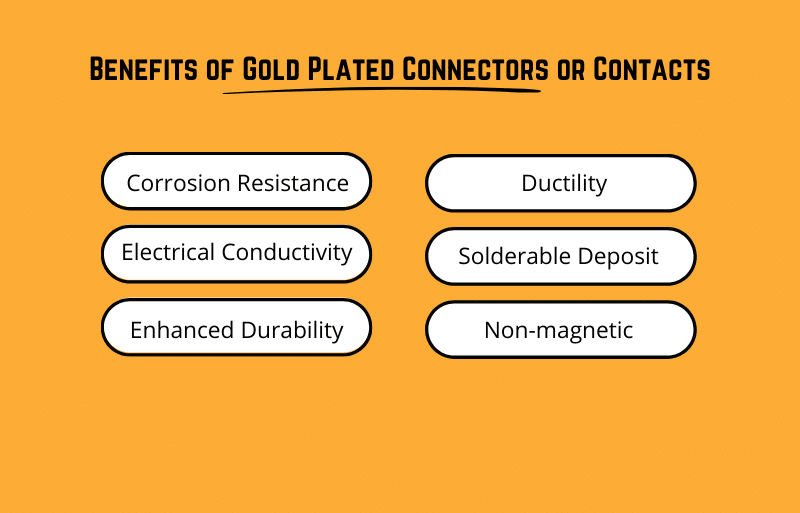
Superior Corrosion Resistance
 In industrial settings where connectors face harsh environments or corrosive substances, gold plating stands out as a corrosion-resistant option. It is not prone to oxidation or corrosion, reliably maintaining the integrity of sensitive contacts that must remain functional for years without degradation.
High Electrical Conductivity for Electronics
Along with its high initial conductivity, gold is also capable of maintaining low contact resistance across extreme temperature ranges and corrosive exposure. This stability is indispensable for modern electronics operating at low voltages, where even minor resistance fluctuations can lead to signal loss or data corruption.
Mechanical Durability and Wear Resistance
Electroplating gold with cobalt or nickel alloys creates “hard gold.” This alloyed finish, combined with gold’s inherent lubricity, significantly mitigates the risks of galling and fretting. When applied over a robust nickel underplate, this system provides a high-cycle life, allowing connectors to be mated and unmated repeatedly without compromising the protective layer.
Superior Ductility for Flexible Components
Gold’s high malleability makes it the ideal choice for dynamic components like springs and flexible interconnects, as it can withstand repeated mechanical deformation without cracking. To optimize performance, a specialized underplate, such as sulfamate nickel, is typically employed to ensure the plating remains intact during the component’s flex cycles.
Solderability
A gold finish facilitates the creation of high-integrity solder joints. It demonstrates excellent wetting characteristics with mild rosin fluxes, streamlining the assembly process. Furthermore, gold can be plated onto challenging substrates, such as stainless steel, to transform an otherwise difficult-to-solder surface into a production-ready component.
Industry Applications of Gold Plating Electronics

Gold plating plays a critical role in maintaining the long-term operational integrity of critical-duty electronic hardware, ensuring consistent, reliable electrical pathways across a device’s lifecycle. It is widely utilized for external hardware such as high-performance Mil-Spec connectors or battery terminals. Gold plating is also commonly found within the internal circuitry and printed circuit boards (PCBs).
Soft gold is the industry standard for internal connections such as pad surfaces. To ensure the reliability of these connections, the plating thickness can be calculated based on the specific substrate materials and the technical demands of the application.
Other Considerations When Using Gold Plating for Electronics
There are several key attributes that need to be considered when specifying gold plating for a connector or contact application.
Ensure Proper Gold Plating Thickness
Specifying the correct thickness is vital for balancing functional reliability with cost-efficiency. Over-specifying results in unnecessary expenses, while under-specifying can lead to premature component failure. The following table outlines standard thickness benchmarks for functional connector applications:
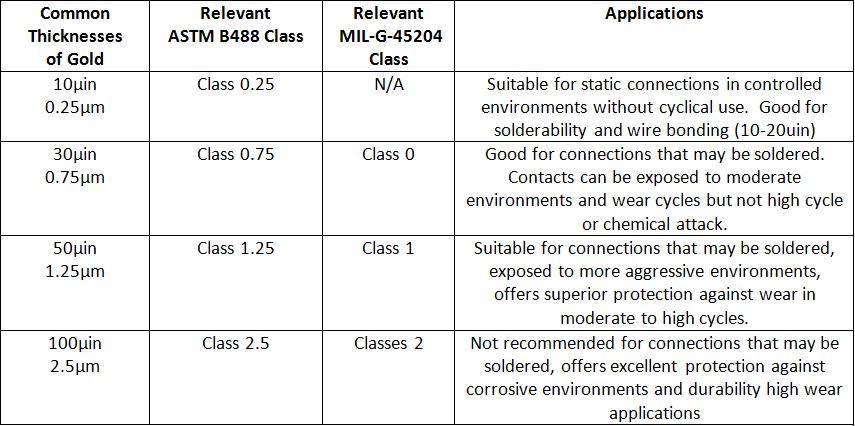
Table 1: Common Gold Plating Thickness for Functional Gold Use
In certain applications, the use of duplex gold or two layers of soft gold followed by hard gold can provide a more effective barrier deposit of gold per mil thickness than with a single layer alone.
Using Hard vs. Soft Gold
The choice between soft and hard gold plating for connectors or other electronics depends entirely on the mechanical demands of the application:
● Soft gold. This high-purity deposit is the preferred choice for static, low-pressure contacts (typically under a 50-gram load). It is also the standard for components requiring wire bonding or soldering.
● Hard gold. By incorporating trace amounts of nickel or cobalt, the gold’s hardness can reach up to 200 Knoop 25. Known as Type II gold plating, it is generally ideal for high-pressure contacts (exceeding 50-gram loads) and components subject to sliding wear, such as male and female contact pins or pogo-pin applications.
Benefits of Silver Plating for Electronics
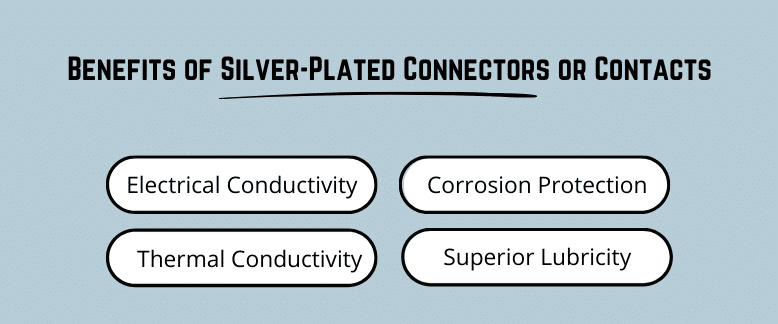
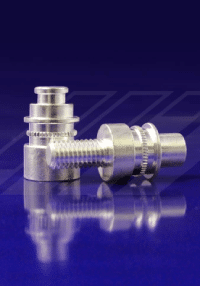
Silver is a highly conductive precious metal that provides an effective barrier to corrosion, making it suitable for use with a range of electronics components.
High Electrical and Thermal Conductivity
Protection Against Corrosion
As a precious metal, silver serves as a highly effective corrosion barrier for electrical contacts and connectors. Its cost-effectiveness compared to gold allows for industrial applications where plating thickness can exceed 0.001″ per side. To maximize durability, silver is frequently applied over electrolytic or electroless nickel underplates.
Lubricity
Silver maintains outstanding lubricity even under extreme temperature conditions. It can be ideal for high-temperature threaded or sliding silver electrical contacts where galling may be a concern. For applications requiring even greater wear resistance, pairing silver with a lubricious underplate, such as electroless nickel, significantly improves the overall mechanical performance and longevity of the connector.
Industry Uses of Silver Plating In Electronics

Due to its superior conductivity and natural lubricity, silver is a common choice for electronic plating. Its versatility and cost-effectiveness allows it to be utilized across a diverse range of electrical sectors, including:
● Power transmission & distribution. Essential for components like bus bars, fuse tabs, current exchangers, power connectors, and disconnect switches.
● Electric Vehicles (EV). Ideal for both fixed and mobile connectors, power inverters, relays, charging hardware, and weld pads designed for ultrasonic welding.sockets
● Bearings & transmissions. Applied to high-temperature bearings, as well as fasteners and lock nuts that require corrosion resistance.
An anti-tarnish barrier may need to be applied over silver plated surfaces to prevent oxidation and sulfide corrosion in harsh or humid environments.
Comparing Underplates for Gold and Silver Plated Components
Underplates can create a structural base for the subsequent precious metals deposit, improve overall conductivity, and provide other benefits based on the application’s unique requirements.
Copper
Copper is a reliable choice for an underplate, as it seals the base material, ensuring strong adhesion and better corrosion defense. Its cyanide-based chemistry helps clean the substrate during the plating process, making it compatible with various base metals.
Electrolytic Nickel
An electrolytic nickel underplate forms an effective diffusion barrier between the substrate and the gold or silver ultimate layers. Electrolytic nickel also has a very high melting point (over 2000 °F), making it a good underplate selection for high-temperature applications.
Electroless Nickel
Electroless nickel plating provides many of the above benefits of electrolytic nickel, including diffusion barrier, structural base, and improved corrosion resistance. Additionally, electroless nickel has the added benefit of being extremely uniform and can be plated to high thicknesses without negatively impacting the dimensional tolerances of a part.
Contact Advanced Plating Technologies to Learn More
Selecting the appropriate plating for connectors and contacts is an important step toward providing dependable electronics products. Advanced Plating Technologies offers extensive surface engineering support for industrial gold plating and silver plating. We also offer reverse engineering of existing or failed applications and components to provide technical design assistance.
Contact a member of APT’s technical sales team to learn more about our gold and silver plating services or request a quote to discuss your specific plating requirements with us.